The Art of Placeholder Text: Understanding and Utilizing Dummy Copy
Have you ever encountered seemingly nonsensical text in a design mockup or website template? Chances are, you’ve stumbled upon what’s known as “dummy copy,” “placeholder text,” or “lorem ipsum.” This unintelligible content isn’t meant to be read for its meaning; rather, it serves a crucial purpose in the design and development process. It acts as a visual stand-in for the actual content that will eventually populate the space.
Imagine designing a website layout without knowing the length or style of the text that will be used. The result could be a visually appealing design that ultimately fails to accommodate the actual content, leading to awkward formatting, truncated sentences, and a compromised user experience. Dummy copy helps prevent these issues by allowing designers and developers to visualize the overall look and feel of a design with realistic text density and flow.
Think of it as the architect’s blueprint before the bricks are laid. The blueprint outlines the structure and spatial relationships, while the dummy copy provides a sense of the textual landscape that will eventually inhabit that space. It allows for adjustments and refinements to be made early on, saving time and resources in the long run. Instead of Hemingway or Melville, perhaps a modern author might be more relatable in real content. However, the purpose of the dummy copy isn’t the content itself, but the impact it has on design.
The impact of well-placed dummy copy can be profound. It goes beyond mere aesthetics, influencing factors like:
- Readability: Does the font size and line height contribute to comfortable reading?
- Visual Hierarchy: Do headings and subheadings stand out effectively?
- Whitespace: Is there sufficient negative space to prevent the design from feeling cluttered?
- Content Flow: Does the text flow naturally within the layout, guiding the user’s eye through the information?
- Overall Balance: Does the text contribute to a balanced and visually appealing composition?
By considering these factors during the design phase, using placeholder text as a guide, you can ensure a final product that is not only visually appealing but also highly functional and user-friendly. In essence, dummy copy ensures that the words will seamlessly expand the concept with clarity, conviction, and even a touch of wit. In design, the unseen is often more important than the seen. The subtle effects of placeholder content impact the final product more than many realize.
Furthermore, a carefully considered design, aided by the strategic use of dummy copy, can yield significant benefits:
- Increased Sales: A well-designed website or marketing material can attract more customers and drive sales.
- Enhanced Credibility: A professional-looking design can build trust and credibility with your target audience.
- Competitive Advantage: A compelling design can help you stand out from the competition and capture market share.
- Customer Loyalty: A positive user experience can foster customer loyalty and encourage repeat business.
In a competitive landscape, overlooking the importance of design is a missed opportunity. Good design anticipates the customer’s needs; poor design frustrates and alienates. Using placeholder text effectively is one element, among many, that contributes to a positive outcome. It’s a reminder that even the smallest details can have a significant impact on the overall success of a project.
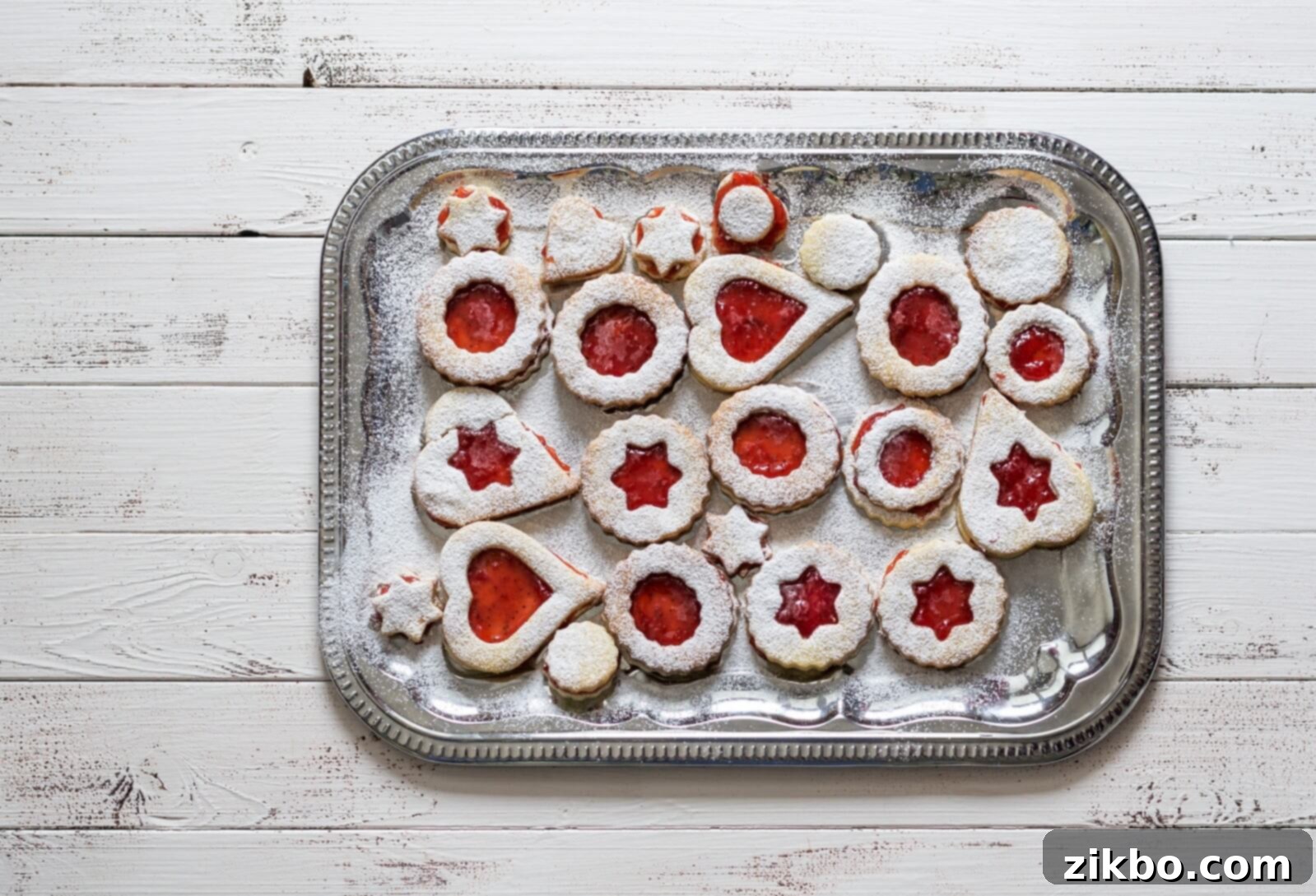
Now, let’s shift gears and explore a delicious recipe for Cinnamon & Orange Jam Linzer Cookies. While seemingly unrelated to the topic of dummy copy, this recipe provides a practical example of how carefully planned steps and ingredients can lead to a delightful final product – much like a well-designed website or marketing campaign. And like dummy copy helps the visual design, the ingredients list helps you anticipate the final result of the recipe. You might even use placeholder ingredients if you were experimenting with a new flavor combination.
Cinnamon & Orange Jam Linzer Cookies
0.0 from 0 votes
4
servings
30
minutes
40
minutes
300
kcal
Ingredients
-
12 tablespoons (170g) unsalted butter, softened
-
1/2 cup (99g) sugar
-
zest (grated rind) of 1 lemon or 1 teaspoon cinnamon
-
1 large egg yolk
-
1 teaspoon vanilla extract
-
1 1/3 cups (160g) King Arthur Unbleached All-Purpose Flour
-
3/4 cup (72g) almond flour
-
1/4 teaspoon fine sea salt
-
raspberry jam, for filling
-
confectioners’ sugar or glazing sugar, for dusting
Directions
- In a medium bowl, whisk together almond flour, all-purpose flour, cinnamon, cloves, and salt. In a small bowl, whisk together egg and vanilla.
- In a large bowl, using a hand mixer, beat butter and sugar until light and fluffy, 3 to 4 minutes. Add egg mixture and beat until combined. Add dry ingredients and beat until just incorporated.
- Divide dough in half, form each half into a disk, and place each between 2 large sheets of parchment paper. Using a rolling pin, roll each piece of dough to 1/8″ in thickness. Place dough sheets on a baking sheet or cutting board and transfer to refrigerator to chill for 2 hours. (Or place in the freezer for 30 minutes.)
- Preheat oven to 375° and line 2 large baking sheets with parchment paper. Peel away one layer of parchment paper from your dough and use a 2″ round cookie cutter to cut out cookies. Use a smaller round cookie cutter to cut windows in half the cookies, if desired.
- Place cookies on baking sheet about 1″ apart. Bake 7 to 9 minutes, or until cookies are lightly golden. Let cool.
- In a microwave safe bowl, stir 1 teaspoon water into jam. Microwave on low for 30 seconds, then spread about 1/2 tsp of jam in the center of a cookie, then top with second cookie. Dust with powdered sugar and serve.
Notes
- Recipe Source
In conclusion, while dummy copy may seem like an insignificant detail, it plays a vital role in the design and development process. By providing a realistic representation of the final content, it enables designers and developers to create visually appealing, user-friendly, and effective products. Similarly, following a well-written recipe, like the one above, ensures a delicious and satisfying culinary creation. Both processes highlight the importance of planning, attention to detail, and a commitment to quality in achieving a successful outcome. Just as a chef carefully selects and arranges ingredients, a designer strategically utilizes placeholder text to craft a compelling and effective final product.