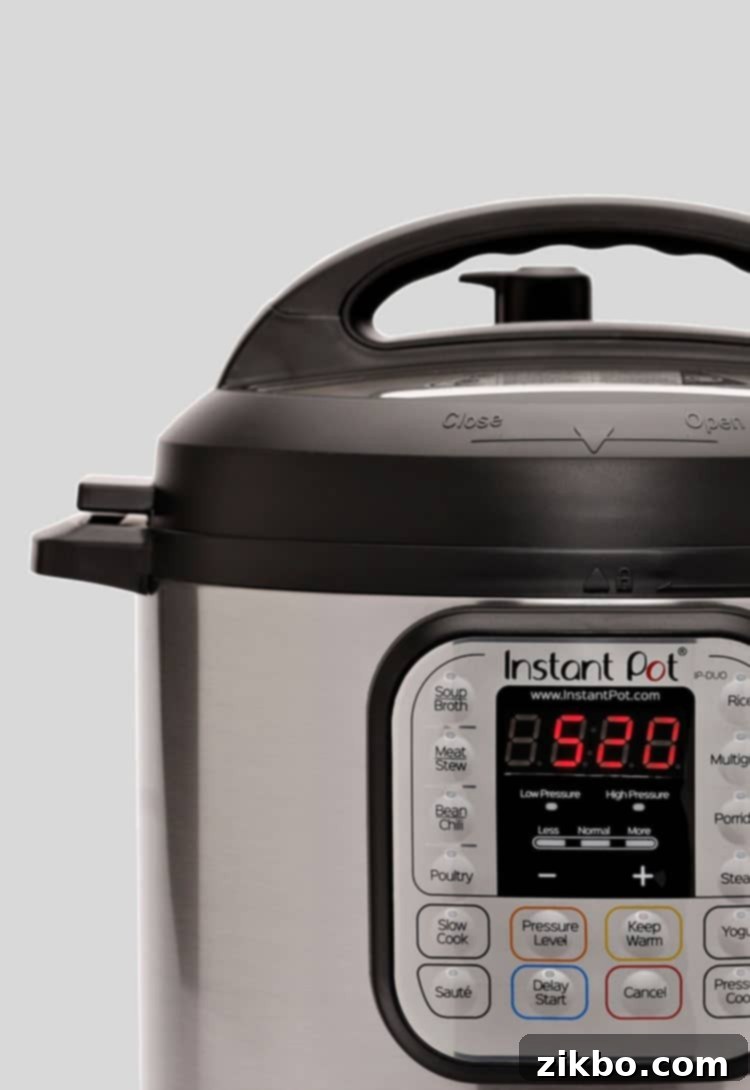
Instant Pot Beginner’s Guide: Essential Tips & Tricks for Mastering Your Electric Pressure Cooker
Inside: Take the crucial first step as an Instant Pot beginner to confidently learn how to use your Instant Pot. This comprehensive guide provides indispensable tips and tricks to help you get started with your new electric pressure cooker!
It’s no secret: I absolutely adore my Instant Pot. This versatile kitchen gadget has revolutionized the way I cook, making meal preparation faster, easier, and more enjoyable. However, I distinctly remember those initial days with my Instant Pot (IP) being a bit daunting. Like many new owners, I felt intimidated by this device that seemed complex and unfamiliar. The good news is, getting started is far simpler than you might imagine. This ultimate Instant Pot beginner’s guide is designed to equip you with the knowledge and confidence to overcome any initial fears and dive straight into creating amazing meals. We’ll cover 13 essential tips that transformed my experience and will help you master your Instant Pot in no time!
Here are 13 incredibly useful Instant Pot newbie tips:
Essential Instant Pot Tips and Tricks for New Users
1. Do The Water Test – Seriously!
When I first unboxed my Instant Pot and started reading the manual, the very first instruction was to perform a ‘Water Test.’ My eyes might have done a slight roll, as my immediate thought was, “Great, I bought a fancy pot, and its grand initiation is… boiling water?” However, I am incredibly glad I followed this instruction. Unpacking and setting up a new appliance can be overwhelming, and the Water Test proved to be an invaluable step in familiarizing myself with its various features and functions without the added pressure of cooking an actual meal.
The Instant Pot doesn’t need to be intimidating; it’s actually designed for incredibly easy and safe use. The Water Test will gently guide you through several critical processes: it teaches you how to properly seal your Instant Pot lid, what it looks like and sounds like when the pot builds pressure (watching the float valve rise is key!), how the countdown timer operates once pressure is reached, and how to safely use both Quick Release (QR) and Natural Release (NR) methods to depressurize your pot. Think of it as your Instant Pot’s flight simulator – a safe environment to learn the controls before your first real culinary adventure.
Here is how to do the Instant Pot water test:
2. Always Use At Least 250ml (1 Cup) of Liquid When Pressure Cooking.
This is a fundamental rule for any electric pressure cooker. Without sufficient liquid, your Instant Pot simply won’t be able to come to pressure. The entire mechanism of pressure cooking relies on steam created from liquid. This steam builds up inside the sealed pot, increasing the internal pressure and temperature, which cooks food much faster than conventional methods. If there isn’t enough liquid, the pot can’t generate the necessary steam, leading to potential “Burn” errors or, at best, undercooked food.
Generally, most recipes call for at least 1 cup (250ml) of thin liquid like water, broth, or stock. This ensures there’s enough steam to build and maintain pressure throughout the cooking cycle. Always provide your Instant Pot with enough liquid to do its job effectively – your delicious results depend on it!
3. Never Use Your Instant Pot on the Stove.
This might seem obvious to some, but it’s a crucial safety reminder for all Instant Pot users, especially beginners. Your Instant Pot is an electric appliance designed with its own internal heating element. Placing it on a stove burner, even a cold one, can cause severe damage to the unit’s electronics, melting components, or even creating a fire hazard. The exterior of the Instant Pot is not designed to withstand direct heat from an external source. So, just don’t. Keep your Instant Pot on a stable, flat surface away from direct heat.
4. Save Time and Sanity with Essential Instant Pot Accessories.
While your Instant Pot is incredibly versatile right out of the box, certain accessories can significantly enhance your cooking experience and efficiency. Investing in a few key items can truly transform how you use your electric pressure cooker.
My two absolute favorite items have been:
- An Extra Sealing Ring: This is a game-changer! Sealing rings tend to absorb odors from strong-smelling foods like curries, chilis, or garlic. Having a separate ring for savory dishes and another for sweet dishes (like cheesecakes or yogurts) prevents flavor cross-contamination, ensuring your dessert doesn’t taste like last night’s pot roast.
- Stackable Steamers or Pot-in-Pot (PIP) Inserts: These are invaluable for cooking an entire meal at once. You can steam vegetables in one tier while cooking rice or a main dish in another. They also allow for cooking delicate foods or those that shouldn’t be submerged in liquid directly.
Other highly recommended accessories include a silicone trivet (often comes with the Instant Pot but spares are useful), a glass lid for slow cooking or serving, and a steam diverter to protect your kitchen cabinets from steam release.
Explore these Instant Pot accessories to maximize your cooking potential.
5. Embrace the ‘Pot-in-Pot’ (PIP) Method.
This tip is worth repeating and emphasizing because the pot-in-pot method is truly huge for saving time, expanding cooking possibilities, and simplifying cleanup. The PIP method involves placing a smaller, oven-safe bowl or pan on a trivet inside the Instant Pot’s inner pot, with water underneath. This allows you to:
- Cook multiple dishes simultaneously: For instance, cook rice in a bowl on the trivet while a stew cooks directly in the main pot.
- Prepare delicate foods: Perfect for cheesecakes, custards, or lasagna that benefit from indirect heat and a gentle steaming environment.
- Prevent scorching: Foods like rice or oatmeal are less likely to stick or burn at the bottom when cooked in a separate insert.
- Easier cleanup: The smaller insert is often easier to wash than the main inner pot, especially for sticky foods.
Look for stackable steamers or oven-safe bowls that fit your Instant Pot model to start experimenting with this incredibly efficient cooking technique.
6. Utilize the Instant Pot’s ‘Delay Start’ and ‘Keep Warm’ Features.
These two features are among my absolute favorites, especially on busy days. They offer incredible flexibility and convenience, making your Instant Pot an even more invaluable kitchen tool:
- Delay Start: This function allows you to program your Instant Pot to begin cooking at a later time. Imagine throwing all your dinner ingredients into the pot in the morning (or during that rare quiet moment when your kids aren’t destroying the house), setting the delay timer, and having it start cooking around dinner time. You come home to the aroma of a freshly cooked meal, ready when you are. It’s perfect for meal prepping and ensures your food is hot and fresh without you needing to be present for the start of cooking.
- Keep Warm: Once your Instant Pot finishes its cooking cycle, it automatically switches to the ‘Keep Warm’ setting. This feature is a lifesaver for those days filled with a million after-school activities, sports practices, or late meetings. Your meal stays perfectly warm and ready to serve for hours without overcooking, giving you the flexibility to eat when it’s convenient for your family. You can also manually select this function to warm food.
7. Preheat Your Liquids to Reduce Pressure-Building Time.
One of the aspects that can add to overall cooking time is the period it takes for the Instant Pot to come up to pressure. If you’re in a hurry, a clever trick to significantly reduce this waiting time is to preheat your liquids. Instead of adding cold broth or water directly to your ingredients, use the ‘Sauté’ setting on high within the Instant Pot itself to warm up your liquids or sauces. Simply add the liquid, leave the lid open, and stir frequently until it’s hot.
You can even add meats and sauté them in the hot liquid simultaneously if desired, building flavor before you even seal the lid. By starting with warm or hot liquids, your Instant Pot needs less energy and time to generate the steam required to reach pressure, getting your delicious meal on the table faster.
8. Don’t Forget to Deglaze Your Pot.
This tip is critical, especially if you frequently use the ‘Sauté’ function to brown meats or vegetables before pressure cooking. After sautéing, you’ll often find caramelized or browned bits stuck to the bottom of the inner pot – this is called “fond,” and it’s packed with flavor! However, if these bits are left stuck to the bottom before you switch to ‘Pressure Cook,’ they can easily cause your Instant Pot to trigger a ‘BURN’ error, as the sensor detects localized overheating.
To deglaze, simply add a small amount of liquid (water, broth, or wine works perfectly) to the inner pot after sautéing. Then, using a flat-edged wooden spoon or a silicone spatula, gently scrape the bottom of the pot to loosen all those flavorful bits. Stir them into the liquid, ensuring the bottom of the pot is completely clear. This step not only prevents errors but also infuses your dish with deeper, richer flavors.
RELATED: How to Not Mess Up Your Meal When Using the Sauté Function
9. Use the ‘Sauté’ Function If Your Meal Has Too Much Liquid.
Sometimes, after pressure cooking, you might find your sauce or stew is thinner than desired. This is a common occurrence, as pressure cooking retains most of the liquid. Fortunately, your Instant Pot has a built-in solution: the ‘Sauté’ function.
After your meal has finished cooking and you’ve released the pressure, simply remove the lid, select the ‘Sauté’ function (usually on a medium or high setting), and bring the liquid to a simmer. Stir frequently to prevent sticking and allow the excess liquid to reduce and thicken to your preferred consistency. This is a great way to fine-tune your sauces without transferring the food to another pot.
10. Use Flour or Cornstarch for Thickening After Pressure Cooking, Not Before.
When a recipe calls for a thickening agent like flour, cornstarch, or even cream or yogurt, it’s best to add these after the pressure cooking cycle is complete. Thickening agents, especially cornstarch or flour, can clump together, settle at the bottom of the pot, and prevent the Instant Pot from building pressure correctly. Even worse, they can stick and cause the dreaded ‘BURN’ error. The same applies to dairy products, which can curdle under high pressure.
Instead, once your meal has finished cooking and the pressure has been released, remove the lid. If using cornstarch or flour, create a slurry by mixing it with a small amount of cold water or broth first, then stir it into your simmering dish using the ‘Sauté’ function (as described in Tip #9) until it reaches your desired thickness. For dairy products, stir them in gently at the end, allowing them to warm through without boiling.
11. When Doing a Quick Pressure Release, Always Open From the Side (Safely!).
Quick Pressure Release (QPR) involves manually opening the steam release valve to rapidly release the built-up pressure. While it’s a great way to quickly stop the cooking process, safety is paramount. When you open the valve, a powerful jet of very hot steam will erupt. To protect yourself from potential burns:
- Use a tool: Never place your hand directly over the valve. Instead, use a long-handled wooden spoon, a silicone spatula, or even a pair of tongs to gently push the steam release handle to the ‘Venting’ position.
- Position is key: Stand back and operate the valve from the side, keeping your face and hands away from the steam vent.
- Mind your surroundings: Ensure your Instant Pot is not positioned directly underneath kitchen cupboards, shelves, or any other objects you don’t want covered in hot steam and potential food splatter. The steam can cause moisture damage and affect finishes.
12. Thick Sauces, Tomato-Based Sauces, and Ready-Made Sauces Can Be Picky.
Be aware that certain types of ingredients, particularly thick, tomato-based sauces, or ready-made gravies, can sometimes cause issues when pressure cooking. Their high viscosity can prevent the Instant Pot from building pressure properly or, more commonly, trigger an OUHT (overheat) or ‘BURN’ error. This happens because the thick sauce might settle at the bottom, insulating the heating element and making the pot believe it’s scorching, even if it’s not.
To prevent these issues:
- Layering is key: Always add thin liquids (water or broth) to the bottom of the pot first. Then, add your solid ingredients, and finally, gently spoon your thicker sauces or tomato products on top without stirring them into the bottom liquid.
- Add water-releasing ingredients: Incorporating ingredients that naturally release water during cooking, such as frozen meats (which release ice melt) or mushrooms, can help maintain enough thin liquid at the bottom.
- Increase liquid amount: If a recipe is notorious for ‘Burn’ errors with thick sauces, try adding an extra 1/4 to 1/3 cup of stock or water to ensure your Instant Pot has sufficient thin liquid to build pressure effectively.
- Consider Pot-in-Pot (PIP): For extremely thick or delicate sauces, the pot-in-pot method (Tip #5) is an excellent way to cook them gently without direct contact with the heating element.
13. Get Cooking, Have Fun, and Don’t Give Up!
One of the most common things I hear from people is, “I’ve had my Instant Pot in its box for months! I’m scared to open it and give it a try.” Seriously – don’t be! That initial apprehension is completely normal, but it’s time to let go of that fear.
The Instant Pot is not your grandma’s old-school stovetop pressure cooker; it’s a modern, electric appliance with numerous built-in safety features that make it incredibly safe and user-friendly. The worst thing that could realistically happen is that your dinner doesn’t turn out perfectly, and you have to try again. Think of each attempt as a learning experience. With a little practice, you’ll quickly become proficient and discover a whole new world of convenient and delicious cooking.
Embrace the learning curve, experiment with different recipes, and most importantly, have fun in your kitchen. Your Instant Pot is waiting to become your new best friend!
p.s. Read this just in case your Instant Pot ever reads BURN…cuz here’s a hint – it doesn’t always mean you are burning your meal 😉
And don’t forget to save this comprehensive Instant Pot beginner’s guide to easily find it again and help other Instant Pot newbies get acquainted with their Instant Pot and unlock its full cooking potential!